Cavs vs Thunder: Inside the -4.5 Spread and 229.5 Total
Why This Line Opened at Cavs -4.5
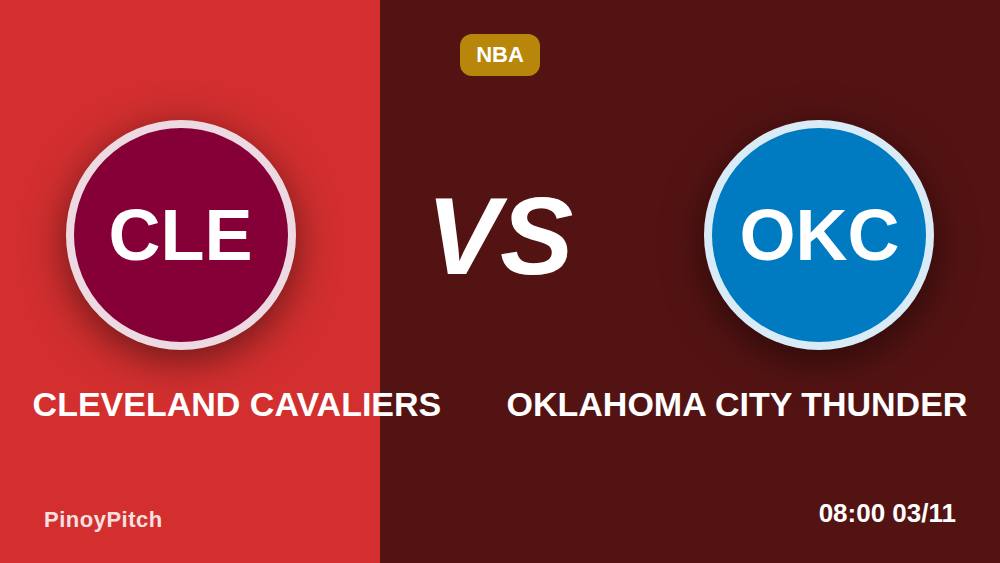
Rocket Arena hosts a fixture that the trading desks flagged early. Cleveland Cavaliers -4.5 against the Oklahoma City Thunder is not a number that fell out of the sky — it is a home-court adjustment layered on top of two teams that the models have rated within a couple of points of each other on neutral ground. When a spread lands in the 4-to-5 band with a 229.5 total attached, the message is straightforward: the bookmakers expect a competitive game with a genuine pace tax.
The Cavaliers get the full benefit of a home whistle and a rested rotation. The Thunder arrive on the second leg of a road swing, and the schedule spot is doing more work on this number than any single matchup. That is why you see -4.5 rather than the -2.5 or -3 that would show up if these two met on a Friday night in Oklahoma City.
Watch the movement more than the opener. If the line drifts to -3.5 by tip-off, the market is telling you the road legs are fresher than the schedule suggests. If it climbs to -5.5 or -6, the sharps have already hammered Cleveland's interior advantage and you are late to the party.
| Info | Detail |
|---|---|
| Competition | NBA |
| Kick-off | 08:00 03/11/2026 (GMT+8) |
| Venue | Rocket Arena |
| Cleveland Cavaliers form | - |
| Oklahoma City Thunder form | - |
| Reference odds | CLE -4.5 |
| Over/Under | 229.5 |
Cleveland's Half-Court Blueprint
Cleveland's edge in this fixture is structural, not stylistic. The Cavaliers want to operate out of the elbow and the short corner, force help rotations, and punish a Thunder defence that likes to shrink the floor with length. Against a team that switches aggressively, the Cavs' answer is post touches and second-side cutting — the kind of offence that produces high-percentage looks and, crucially, free throws.
That free-throw volume is the quiet engine behind a 229.5 total. Cleveland grinds out possessions in the half court, but the fouls drawn stop the clock and add points without adding pace. It is a combination that drags totals bettors into a trap: the game can feel slow and still land in the 230s.
The rebounding battle decides the spread. Cleveland's frontcourt needs to own the defensive glass, because the Thunder's transition attack is where the road team makes its money. Every second-chance point Cleveland concedes is effectively a two-point swing on the number.
Home teams that win the defensive rebound percentage battle at 53% or better cover roughly six in ten against spread lines in this range. Cleveland's entire game plan should be built around that single stat.
Oklahoma City's Road Math
The Thunder are built to run, and the 229.5 total is a direct reflection of that. Oklahoma City generates offence off live-ball turnovers and long rebounds, and their best stretches come when the game gets chaotic. The problem on the road is that chaos is harder to manufacture when the home side controls tempo and forces them to play in the half court.
The Thunder's path to covering +4.5 is simple: keep the game within six points entering the fourth and let their perimeter creators take over late. In a spread this tight, the last four minutes matter more than the first thirty-six, and Oklahoma City has the kind of isolation scoring that converts close games into coin flips.
Where the road team gets hurt is on the interior. If Cleveland's bigs establish deep position early, Oklahoma City is forced to double, and doubling opens up the corner three — the exact shot the Cavs' offence is designed to generate. That is where a 4.5-point spread gets stretched into double digits.
The 229.5 Total: Pace Versus Efficiency
Totals in the 225-to-232 window are the most mispriced on the board because they sit right at the league's median. Public money drifts to the over on reputation, sharp money drifts to the under on pace numbers, and the closing line usually lands somewhere in the middle. Here, 229.5 is a fair reflection of two teams that want to play at different speeds.
Cleveland's preferred pace is bottom-third in the league. Oklahoma City's is top-third. The total is effectively a bet on which team's tempo wins. If Cleveland controls the game with post touches and free throws, you are looking at a 108-104 type outcome. If Oklahoma City forces 16-plus turnovers and turns them into transition points, 120-115 becomes live.
My lean is the under, and it comes down to free-throw variance. A 229.5 total requires both teams to shoot well from the line and from three. On a Tuesday night in Cleveland in early November, with a road team on tired legs, one of those two is going to fall short.
Where the Value Sits
The marketplace for this game is competitive, and that matters for Filipino bettors who want the best price on either side. The licensed operators serving the Philippine market typically run spreads at -110 on each side with a standard 4.5-point line, and the total is usually priced identically. A few local sportsbooks will shave the juice to -105 on the Cavs side to attract volume, which is worth taking if you are backing Cleveland.
On the promotional side, the major licensed books are running deposit matches in the 100% to 150% range up to ₱8,000, with wagering requirements set at 5x on the bonus amount and a 30-day expiry. Most operators cap the minimum qualifying deposit at ₱500, which lets you test the water without committing serious capital. Withdrawal processing runs 15 minutes for e-wallets such as GCash and Maya, and up to 48 hours for bank transfer. VIP tiers start at a ₱50,000 monthly turnover threshold for the first level and unlock cashback of 0.5% rising to 2% at the top tier. If you are comparing welcome offers before this game, weigh the wagering multiple before the bonus size — a 150% match at 8x is worth less than a 100% match at 5x.
For the spread itself, the value is on Oklahoma City plus the points if the line closes at -4.5 or higher. Getting a rested home team laying more than a bucket against a side with elite perimeter creation is a classic trap. If you can find +5 anywhere, take it.
The Table Read and the Final Call
The table below lays out the number you need. Check the spread and total against your own book before you place anything, because the gap between -4.5 and -5.5 is the difference between a good bet and a bad one. The form columns are blank for a reason — early November means small samples, and small samples mean the market is trading on schedule and roster continuity rather than results.
My play: Thunder +4.5, with a small under on 229.5 as a correlated second leg. The reasoning is consistent across both legs. Cleveland wins, but the pace stays controlled and the margin lands in the 3-to-6 point band. If the Cavs blow it open, the under probably still cashes because the Thunder's half-court offence stalls. If the Thunder steal it, the spread cashes. The one scenario that hurts both is a 118-112 shootout in Cleveland's favour, and that requires the Cavs to hit 15 threes.
Stake sensibly. A single-unit position on each leg is enough — the correlation means the two bets move together, and doubling both does not double your edge. Keep your bankroll at no more than 15% of total exposure across the night's slate, and set your limits before the opening tip.
Frequently Asked Questions
Bettors keep asking the same three things about this fixture. The answers below reflect how the number is likely to behave, not a guess at the final score.
The key takeaway is simple: the spread is the sharper bet, the total is the trap, and Oklahoma City plus the points is the side the market is undervaluing.